Showing posts with label All Saints Day. Show all posts

Sunday, November 01, 2015

New art film highlights queer saints, Sebastian and homophobic violence for All Saints Day

Tony O'Connell prepares to kiss St Sebastian in his new film
Prayers to queer saints and a re-enactment of Saint Sebastian’s martyrdom make a strong statement against homophobic violence in a new short film for All Saints Day by queer British artist Tony O’Connell.

He sculpted a life-size statue of Sebastian and filmed his dramatic interactions with the figure, who is widely recognized as the patron saint of homosexuality.

The 12-minute video film of his performance art premieres today for All Saints Day at a private viewing in Liverpool and also on YouTube. The multimedia event includes an art exhibit of the Sebastian statue and related “relics” -- small sculptural assemblages fashioned by O’Connell from props in the film.


O’Connell’s script can serve as a model prayer for people of faith, while sharply criticizing church leaders who incite violence against LGBTQ people. He calls upon Sebastian “not to punish but only to humble those who dedicate themselves to oppression and evil,” listing more than a dozen of them by name.

Then he invites Sebastian to “be glorified with the host of our own queer saints,” who are also named. They include a wide variety of LGBTQ leaders and martyrs throughout history as well as traditional saints who broke gender taboos.

The text is reprinted below in full with O’Connell’s permission.

Sebastian was an early Christian martyr who was shot with arrows and executed in 288 on orders from the Roman emperor. In addition to his longstanding but unofficial status as patron saint of gay men, he is known as a protector against plague and a patron saint of soldiers, archers and athletes.

Hinting at a love-hate relationship and the complexity of the queer spiritual path, O’Connell plays three different roles in the film: A priest who kisses Sebastian on the lips and then spits on the ground. The police executioner who strips Sebastian and shoots arrows into his chest. A queer activist/devotee who honors the martyr with prayers and offerings.

The action occurs in the Bridewell, a former police station that has been converted to art studios in Liverpool. The film is titled “Sancte Sebastian ora pro nobis.” The Latin words mean “Saint Sebastian, pray for us,” a phrase that recurs many times in O’Connell’s voice-over narration.

St Sebastian is martyred by arrows in O'Connell's film

This is O’Connell’s first film, but he has spent years creating art on themes of queer sainthood, democratizing sacredness, and reclaiming the holiness in ordinary life, especially in LGBT experience, His ongoing series include pilgrimages to LGBT historical sites and photos of people with haloes formed by round objects from daily life.

The new film weaves together aspects of O’Connell’s own queer and religious background. He was raised in the Roman Catholic church, but has been a practicing Buddhist since 1995. While playing a priest in the film, he spreads smoky incense with a golden thurible like the one he remembers from his childhood stint as an altar boy. Later in the film he wears the 25-year-old T-shirt that he wore  during the early years of the radical British LGBT-rights group Outrage!

“I feel like making this sculpture has not only taken me back to my roots as a sculptor but allowed for genuine spiritual practice,” O’Connell told the Jesus in Love Blog. “I am careful never to work with unwashed hands or not to start touching him before I have made incense offerings to him.”

Filming finished in late October, but the project is far from done. For today’s premiere, O’Connell transformed his Sebastian sculpture by filling him with fragrant oils so he smells like roses, covering his face with gold leaf and building him a halo to indicate that he is now a saint.

Later Sebastian may be reincarnated as a Buddha. “After he has been Saint Sebastian it is possible he will be broken down and reused to build a seated Buddha Shakyamuni for our Liverpool Centre,” O’Connell said. “It would be suitable for me to see becoming a Buddha as a symbol for spiritual evolution -- or even a reward for martyrdom.”

O’Connell worked with many camera people on the film. They include another Liverpool queer artist, Colin Cairns, who is exhibiting his art about pagan deities at the premiere today. Others on the camera crew include Claire Martin, Heather Snow Gum, Kelsang Tenwang, Damian Cruikshank (who also shot O’Connell’s Alan Turing pilgrimage), Dave Elis and Fiona Filby.


Sancte Sebastian ora pro nobis
By Tony O’Connell

Welcoming the saint when others do not
 
Saint Sebastian, Glorious martyr, I invite you and welcome you to this space. Please bless us with your presence. My father was born in your parish and I knew you from childhood. Now it seems images of your sacrifice are no longer in currency in church shops. Statues, rupas and paintings of you are disappearing. Our Poets and artists have always adored you. Perhaps your association with us has led to removal. If this is true and others turn away from you, know that I do not and we do not, therefore I offer you this litany in celebration and remembrance.


Offerings to the saint and prostrations at his lotus feet

Saint Sebastian, Pray for us.

Invincible Martyr, Pray for us.

Knight, noble by birth and fame, Pray for us.

Glorious warrior and martyr of Christ, Pray for us.

Patron and mirror of soldiers, Pray for us.

Despiser of the world, Pray for us.

Conqueror of Satan, Pray for us.

Comfort of the dying, Pray for us.

Consoler of the afflicted, Pray for us.

Announcer of the truth, Pray for us.

St. Sebastian, perfect in virtue and wisdom, Pray for us.

St. Sebastian, mighty in word and work, Pray for us.

St. Sebastian, who strengthens the persecuted Pray for us.

St. Sebastian, who by example gives courage to the down-trodden Pray for us.

St. Sebastian, empowered to avert pestilence and contagious diseases, Pray for us.

St. Sebastian empowered to protect from plague and AIDS, Pray for us

St. Sebastian, surrounded by celestial light, Pray for us.

St. Sebastian, instructed by holy Angels, Pray for us.

St. Sebastian, giving speech to those without a voice, Pray for us.

St. Sebastian, lover of God and men, Pray for us.

St Sebastian, loved and then abandoned by the Roman Emperor, Pray for us.

St. Sebastian, loved and increasingly abandoned by the Roman Church, Pray for us

St. Sebastian, Loved by our people, Pray for us.

St. Sebastian, who, inflamed with love despised the pains inflicted by the tyrant, Pray for us.

St. Sebastian, unafraid of worldly authority or law, Pray for us.

St. Sebastian, unbowed by physical violence, Pray for us.

St. Sebastian, with the courage to defy your abusers, Pray for us.

St. Sebastian, who was wounded by arrows, Pray for us.

St. Sebastian, who was murdered with clubs, Pray for us.

St. Sebastian, who was crowned with eternal glory, Pray for us.


Protection by the saint from enemies

Glorious Martyr and undefeated warrior, we ask that you protect the persecuted from tyrants and enemies. Use your unstoppable energy not to punish but only to humble those who dedicate themselves to oppression and evil.

Please humble all members of Fred Phelps’ Westboro Baptist Church

Please Humble Anne Coulson, speaker of hate and supporter of the WBC

Please humble Grindr using Rev Matthew Makela, who drove Tyler Kish to consider suicide by saying “he was going to hell either way”

Please humble Westcity Bible Baptist Church pastor Logan Robertson who called a gay Christian author a "filthy child molesting fag".

Please humble hypocrite Clerk of Rowan County, Kim Davis

Please humble Steven Anderson, Baptist pastor in Arizona who called for the death of all gays.

Please humble televangelist Pat Robertson who has dedicated his life to poison and hate.

Please humble Pope Benedict and Pope Francis who failed our people beyond measure.

Please humble Hate preacher Scott Lively to stand trial for crimes against humanity

Please humble Pastor James David Manning, who’s homophobic sign oppresses the vulnerable

Please humble Hull vicar Melvin Tinker who compares homosexuality to paedophilia and adultery

Please humble Brian Brown of the National Organisation for Marriage who spread hate as far as Russia

Please humble Vitaly Milonov sponsor of legislation criminalizing "homosexual propaganda.” who dedicates his life to hate.

Please humble Ugandan Dictator, Yoweri Museveni, whose law condemns homosexuals to life imprisonment.

And causing these enemies to fall from public grace, allow them the shame to recognise the harm they have caused and repent it.


Litany of the Queer Saints

Seeing that your image seems increasingly sanitised from church shops but knowing that we have not forgotten your name, we invite you and welcome you to sit and be glorified with the host of our own queer saints. Take your place with the brave, the gentle and the fierce to be honoured for ever and ever in knowing that we have never abandoned you.

Saint Derek Jarman of Dungeness, hero, artist, Disciple of St Sebastian, martyred by deliberate lack of funding into HIV, Pray for us.

Saint Peter Tatchel, fierce protector of the west, unbowed in the face of violence and hate, Pray for us.

Saint Nikolay Alexeyev, fierce protector of the East, resistant to tyranny, Pray for us.

Saint Uncumber, gender defiant bearded lady, patron of purity and refusal, Pray for us.

Saint Joan of Arc, Fearless warrior and gender-queer martyr, Pray for us.

Saints Boris and Saint George of Russia united in love and death, Pray for us.

Saint Sergius and Saint Bachus united in love and death, Pray for us.

Saints Perpetua and Saint Felicity: Patron saints of same-sex couples, Pray for us

Saint Aderonke Apata, protector of Nigeria, courageous in the face of humiliation and violence, Pray for us.

Saint Mark Ashton LGSM, hero of solidarity with the miners, Pray for us.

Saint David Kato: Ugandan activist and resilient martyr, Pray for us.

Saint Matthew Shepard, crucified by hateful men, young forever, Pray for us.

Saint Mychal Judge, Fire-brigade chaplain and First martyr of 9/11, ordained but un-canonised by the church on account of your queer spirit, Pray for us.

Saint Alan Turing, who ended war, saved millions and changed the world- martyred by the judiciary, Pray for us.

Saint Oscar Wilde, our saint of humour, grace and elegance, whose gentle hands were put to hard labour, Pray for us.

Saint Harvey Milk, courageous and compassionate, mayor and martyr of San Francisco, Pray for us.

Holy Innocents of the Nazi death camps, Pray for us.

Holy Innocents martyred by ISIS, Pray for us.

Holy Innocents driven to death by the church, Pray for us.

Daughters of Stonewall, Pray for us.

Martyrs of the Upstairs Lounge, Pray for us.

Saint Leelah Alcorn, our sister who walked into the oncoming tide for the benefit of others, Pray for us.

Saint Sebastian we prostrate to you and thank you. Empowered by the benison of your protection we go forward with courage and grace to face the arrows of oppressors and tyrants, and to defeat them.

Amen

___
Related link:

Why we need LGBT saints by Kittredge Cherry

___
This post is part of the Artists series by Kittredge Cherry at the Jesus in Love Blog. The series profiles artists who use lesbian, gay, bisexual, transgender (LGBT) and queer spiritual and religious imagery. It also highlights great queer artists from history, with an emphasis on their spiritual lives.

Copyright © Kittredge Cherry. All rights reserved.
http://www.jesusinlove.blogspot.com/
Jesus in Love Blog on LGBT spirituality and the arts

Saturday, October 31, 2015

LGBT-friendly online memorial for All Hallows' Eve, All Saints, All Souls and Day of the Dead

Rainbow candles on the altar for the LGBT Service of Remembrance at Trinity Episcopal Cathedral in Sacramento

Welcome to Jesus in Love’s LGBTQ-friendly online memorial. Many believe that the souls of the dead are visiting this weekend for All Hallow’s Eve (Halloween), All Saints Day, All Souls and Day of the Dead. Everyone is invited to add names by leaving a comment.

Religion and society have often dishonored and desecrated queer lives. May all saints and all souls be restored to wholeness and holiness as we remember them.

We give thanks for the lives lost, and carry them in our hearts with the hope that we shall see them again. May perpetual light shine upon them as they rest in peace and in power. More info is at the end of the memorial.


Compassionate Spirit of God, unite us with the lives and visions of lesbian and gay heroes of our time… Unite us with all the souls living and dead, especially those souls taken by violence and AIDS. Unite us with all who boldly pioneered a way of pride and justice.
--from “Invocation for All Saints Day” by James Lancaster, published in Equal Rites


white candle Pictures, Images and Photos


In memory of: Tyler Clementi, Leelah Alcorn, Haylee Fentress, Paige Moravetz, Seth Walsh, Jeanine Blanchette, Chantal Dube and all other LGBTIQ youths who have committed suicide. Gwen Araujo, Rita Hester, Brandon Teena and all others who were killed due to anti-transgender hatred or prejudice. Harvey Milk, Matthew Shepard, FannyAnn Eddy, David Kato, Alan Schindler, and all others who were murdered in homophobic violence. Marcella Althaus-Reid, John Boswell, Peter Gomes, Bayard Rustin and all others who came out and supported LGBT people during their lifetimes. Mychal Judge, Henri Nouwen, Pauli Murray and all other religious leaders who worked for justice while keeping quiet about their sexual orientation. For Jeanne Manford, Adele Starr, and all others who stood as allies to LGBT family and friends. Rock Hudson, Freddie Mercury, Keith Haring, Alvin Ailey, Rev. Ron Russell-Coons, Rev. Jim Sandmire, Rev. Howard Wells and all others who died of AIDS. And for all saints and all souls, named and unnamed.


Therefore, since we are surrounded by so great a cloud of witnesses, let us also lay aside every weight, and sin which clings so closely, and let us run with endurance the race that is set before us,
--Hebrews 12:1


candle animated avatar Pictures, Images and Photos


I sing a song of the saints of God,
patient and brave and true,
who toiled and fought and lived and died
for the God they loved and knew.
And one was a doctor, and one was a queen,
and one was a shepherdess on the green;
they were all of them saints of God, and I mean,
God helping, to be one too.
-- from “I Sing a Song of the Saints of God” by Lesbia Scott, 1929


All Saints Day (Nov. 1) used to be called All Hallows Day, and the preceding evening was the Eve of All Hallows, now celebrated as Halloween. In Catholic and Protestant Christianity, the Feast of All Saints commemorates all saints, known and unknown. The following day, the Feast of All Souls, pays respect to the faithful departed who have not yet reached heaven. Prayers are offered to ask the saints to help the living, and to offer help to the souls of deceased friends and family.

All Souls Day is celebrated in Latin America as the Day of the Dead (Dia de los Muertos). The holiday is especially popular in Mexico, where the happy celebration is one of the biggest events of the year. These holidays are associated with the Celtic Festival of the Dead (Samhain). They grow out of the pagan belief that the souls of the dead return to visit at this time of year.


___
Related links:

LGBT Saints Series

Why we need LGBT saints: A queer theology of sainthood by Kittredge Cherry

LGBT litany of the saints: Harvey Milk, pray for us; Joan of Arc, pray for us... by Rachel Waltz

Queering All Saints and All Souls, Celebrating the Queer Body of Christ by Adam Ackley (Huff Post)

A Litany of All the Saints by James Kiefer

____
This post is part of the LGBT Calendar series by Kittredge Cherry at the Jesus in Love Blog. The series celebrates religious and spiritual holidays, holy days, feast days, festivals, anniversaries, liturgical seasons and other occasions of special interest to lesbian, gay, bisexual, transgender and queer people of faith and our allies.

LGBTQ saints and martyrs added at Jesus in Love

Altar Cross of LGBTQ Martyrs from Metropolitan Community Church of San Francisco

Eight new profiles have been added to the LGBTQ Saints page at JesusInLove.org in preparation for All Saints Day on Nov. 1.

They include both traditional saints and alternative figures not recognized by the institutional church.

In addition the Jesusinlove.org website was updated with 14 new articles in the Queer Christ series, six new entries in the Artists series, five holidays added to the LGBT calendar, and nine new  Spanish translations.

LGBT Saints page
With these new saints, the LGBT Saints series has grown to more than 70 profiles.  Along with official saints, there are martyrs, mystics, prophets, witnesses, heroes, holy people, humanitarians, deities and religious figures of special interest to LGBTQ people and our allies.

Here is a list of new saints who are welcomed to the LGBT Saints page today.

Traditional Christian

Malachy of Armagh

Blessed John of La Verna: Kissed by Jesus

Madre Juana de la Cruz: Transgender saint of 16th-century Spain?

Malachy of Armagh: Same-sex soulmate to Bernard of Clairvaux

Uganda Martyrs raise questions on homosexuality, religion and LGBT rights


New and alternative

Radclyffe Hall
Jeremy Bentham: Homosexuality of Jesus explored by 18th-century philosopher

Malcolm Boyd: Pioneering gay Episcopal priest

Radclyffe Hall: Queer Christian themes mark banned book "Well of Loneliness"

Alan Turing: Codebreaker honored in queer spiritual art

Queer and LGBT saints are important because people are searching for alternative ways to lead loving lives. Churches have tried to control people by burying queer history. The LGBTQ saints show us not only their place in history, but also our own place -- because we are all saints who are meant to embody love. We can tap into the energy of our ancestors in faith. For some they become friends, helpers and miracle-workers. I created the LGBT Saints page to give people an easy way to find the spiritual resources that they seek. For more info, see my essay Why we need LGBT saints.

___
This article is illustrated with the Altar Cross of LGBTQ Martyrs. It was constructed by a congregant at Metropolitan Community Church of San Franscico for All Saints Day (All Hallows) worship services there. The cross features newspaper photos of Matthew Shepard and Harvey Milk. In the center of the cross is the fence where Shepard was tortured and murdered in Laramie, Wyoming.  He died on 10/12/88.

Other LGBTQ martyr named on the cross are:
Brian Wilmes – Hate Crimes Slaying 09/08/99 in San Francisco
Lawrence King – Hate Crimes Murder 02/12/08 in Oxnard, Ca.
Roxanne Ellis and Michelle Abdill – Murdered 12-04-95 in Medford, Oregon
Harvey Milk – Assassinated - 11/27/78
Tyra Hunter – Medical Care Denied – 08/07/95 in Washington D.C.
Gwen Araujo – Hate Crimes Murder – 10/03/02 in Newark, Calif.
Thank you to Lynn Jordan for the photo and information about the Altar Cross of LGBTQ Martyrs.

Let us be inspired by the LGBT saints who surround us as a “great cloud of witnesses.”  May we commit ourselves to our own queer spiritual journeys.
___
Related links:

Why we need LGBT saints by Kittredge Cherry

An All Hallows' Eve Vigil to Begin Transgender Awareness Month by H. Adam Ackley (Huff Post)

A queer theology of sainthood emerges (99 Brattle blog of Episcopal Divinity School)

Feminism leads to a queer theology of sainthood (Feminism and Religion Blog)

Who are the "Queer Saints and Martyrs"? by Terence Weldon (Queering the Church)

LGBT-friendly memorial for All Saints, All Souls and Day of the Dead

LGBT litany of the saints: Harvey Milk, pray for us; Joan of Arc, pray for us... by Rachel Waltz

A Litany of All the Saints by James Kiefer

Sanctity And Male Desire: A Gay Reading Of Saints by Donald Boisvert

Passionate Holiness: Marginalized Christian Devotions for Distinctive People by Dennis O’Neill

Copyright © Kittredge Cherry. All rights reserved.
http://www.jesusinlove.blogspot.com/
Jesus in Love Blog on LGBT spirituality and the arts

Friday, October 30, 2015

Why we need LGBT saints

Rainbow detail from St. John Altarpiece by Hans Memling (Wikipedia.com)

It’s time to welcome the queer saints. Many believe that saints and other souls will visit this weekend for Halloween, All Saints Day, All Souls Day, and Day of the Dead (Dia de los Muertos). LGBT saints are important because people are searching for alternative ways to lead loving lives.

Churches have tried to control people by burying queer history. The LGBT saints show us not only THEIR place in history, but also OUR place -- because we are all saints who are meant to embody love. We can tap into the energy of our ancestors in faith. For some they become friends and helpers, working miracles as simple as a reminding us that “you are not alone.”

For a new version of this article, click this link to Qspirit.net:
Why we need LGBTQ saints: A queer theology of sainthood


At first I thought that LGBT saints were rare. Gradually I came to see that they are everywhere throughout all time and they are among us now. We have all met saints in our lives. They are ordinary people who are also extraordinary.

Calling someone a “queer saint” is a liberating act in two ways: The most obvious one is that revealing the hidden queer sexual orientation or gender identity of traditional saints liberates people from sex-negative, oppressive church dogmas. In addition, revealing the “saintliness” of LGBT people ignored by the church liberates people from the tyranny of the sacred/secular dichotomy. Phrases like “queer saint” make a nice shorthand for headlines -- neatly challenging the assumption that sainthood and LGBTQ identity are mutually exclusive.

As All Saints Day approaches, I offer reflections on what I have learned by writing more than 70 profiles in the LGBT Saints Series over the past eight years. This is my queer theology of sainthood.

Sergius and Bacchus
by Robert Lentz
TrinityStores.com
Who are the LGBT and queer saints? If you want some specific names of this rainbow tribe, visit the LGBT Saints page at http://jesusinlove.org/saints.php.

One of the greatest challenges has been to figure out who is a “saint” and who is “LGBT.” If the boundaries of sainthood are slippery, then the definition LGBT is even more fluid.

Most mainstream churches would not canonize any saints who were openly LGBT, so we must claim our own saints. It’s important to re-evaluate familiar figures as well as to recover those who have been lost and recognize the saints of our own time. The church may seem to have the power to decide who is a saint, but each individual can also choose for themselves. Paul urges us to “work out your own salvation with fear and trembling” (Philippians 2:12).

Mitch Gould, a historian of queer and Quaker subjects, summed up the dilemma well when he told me, “Sainthood is a devilishly nuanced accusation.” Traditional stories of the saints tend to be overly pious, presenting idealized super-heroes who seem distant and irrelevant. Saints have been used to get people to passively accept oppressive situations. Too often the saints have been put on a pedestal to glorify virginity and masochistic suffering. The emphasis on miracles disrespects nature, the ongoing miracle of life.

Feminists have criticized saints as tools of the dominant morality, but with LGBT saints the opposite is true: They saints can shake up the status quo. We can restore the complex reality of saints whose lives are being hijacked by  hagiograpahies and hierarchy to enforce the status quo. Queer saints can help reclaim the wholeness, connecting sexuality and spirituality for the good of all.

Perpetua and Felicity
by Robert Lentz
TrinityStores.com
I began writing about LGBT saints after finishing a series of books on the queer Christ (Jesus in Love novels and Art That Dares). Many people told me that they couldn’t relate to a gay Jesus, but they liked the idea that LGBT people were among his followers. Church leaders have used saints to impose control from the top down, but the desire for saints springs naturally from the grassroots. People are drawn to the presence of spiritual power in the lives of the saints, and their willingness to use that power for others, even at great cost to themselves. Saints attract others with the quality of their love, even though their personal lives may not be “saintly.”

I was aware of new research and art about LGBT saints, so I was shocked to discover that it was not easily available online. Largely due to the church’s crackdown on LGBT spirituality, much of it was buried under obscure code names like “images that challenge” -- if it was available on the Internet at all.

As an independent blogger, I am free to put LGBT saints out there where more people can find and benefit from them. I decided to uncover and highlight holy heroes and role models to inspire LGBT people of faith and our allies. The positive response quickly affirmed that people are hungry to connect with queer people of faith who have gone before.

“The Forerunners of Christ with Saints and Martyrs” by Fra Angelico, 1428-30, Wikimedia Commons

What is a saint?
My definition of who qualifies as a “LGBT saint” continues to expand. First I included saints officially canonized by the church, but I soon discovered that many have achieved “sainthood” by popular acclaim. The church didn’t even have a formal canonization process for its first 1,000 years.

Ultimately all believers, living and dead, can be called “saints,” a practice that began in the early church. In the New Testament, Paul used the word “saint” to refer to every member of the Christian community, a practice continued by Rev. Troy Perry, founder of Metropolitan Community Churches. One of my memories from working with him was that whenever he wrote a letter to MCC members, he addressed it as "Dear Saints." We always got back some responses from people protesting, "I'm not a saint!" But in a very real sense, we are all saints.

Dictionaries define a saint as “a holy person” or “an extremely virtuous person.” I rather like the concept of sainthood that emerged in comments on this blog during a discussion of the post “Artist shows sensuous gay saints.” Atlanta artist Trudie Barreras wrote: “My definition of saint has absolutely nothing to do with what the hierarchical church defines, and everything to do with the quality of love displayed.” Or, as gay author Toby Johnson commented, “Being a saint means creating more love in the world.”

Joan of Arc
by Robert Lentz
TrinityStores.com
Sainthood comes in many different forms. Some become saints by leading an exemplary life, but the surest path to sainthood is to risk or lose one’s for the good of others. As Jesus said, “Greater love has no one than this: to lay down one’s life for one’s friends.” (John 15:13). Martyrs, from the Greek word for “to bear witness,” are a common type of saint.

Sometimes readers object that my LGBT saints series includes modern martyrs whose lives were not “saintly.” My understanding is that martyrs need not be role models, but they are honored simply because they were killed for a particular cause. Therefore I include people such as Harvey Milk and Matthew Shepard because they were killed for being gay and their deaths furthered the cause of LGBT rights, regardless of their flaws.

Whether or not they died as martyrs, the lives of the saints were indeed difficult. Our lives are difficult too -- and that can become a point of connection. Like today’s LGBT Christians, the saints sometimes faced opposition from within the church. Some martyrs, including cross-dresser Joan of Arc, were killed not FOR the church, but BY the church!

What is LGBT?
Lesbian, gay, bisexual, transgender and queer did not exist as categories throughout most of the history in which the saints lived. A convenient way around this dilemma is to say that LGBT saints are those of special interest to LGBT people and our allies. The term “queer” is increasingly used to describe gender-variant people of the past, so I often use the phrase “queer saints.”

Harvey Milk
by Robert Lentz
TrinityStores.com
Some deny the existence of historical LGBT saints because it’s almost impossible to prove their sexual activity. However, same-sex love does not have to be sexually consummated for someone to be honored as an LGBT saint. Deep love between two people of the same gender is enough.

Homosexuality is more than sexual conduct. The American Psychological Association defines sexual orientation as “an enduring pattern of emotional, romantic, and/or sexual attractions.” The dominant Christian culture tried to suppress overt homosexuality, so any hint of homosexuality that survives in the historical record should be given extra significance. Many official saints were nuns or monks living in same-gender convents or monasteries.  Naturally their primary emotional attachments were to people of the same gender. Soon almost all saints seem LGBT!

Let us be inspired by the LGBT saints who surround us as a “great cloud of witnesses” and commit ourselves to our own queer paths toward sainthood.

___
Image credit: God is enthroned in concentric rainbows with 24 elders seated within the outer rainbow in a detail from the 15th-century St. John Altarpiece by Hans Memling (Wikipedia.com). The image is based on John’s vision of the Apocalypse from the Book of Revelation.

___
Related links:

I have expanded on the ideas presented here by writing theological reflections based on feminist and queer theology at the following two blogs:

Feminism and Religion Blog: Feminism leads to a queer theology of sainthood by Kittredge Cherry

99 Brattle (Episcopal Divinity School blog): A queer theology of sainthood emerges by Kittredge Cherry

To read this post in Spanish / en español, go to Santos Queer:
¿Por qué necesitamos santas y santos LGBT?

Who are the "Queer Saints and Martyrs"? by Terence Weldon (Queering the Church)

LGBT-friendly memorial for All Saints, All Souls and Day of the Dead

An All Hallows' Eve Vigil to Begin Transgender Awareness Month by H. Adam Ackley (Huff Post)

LGBT litany of the saints: Harvey Milk, pray for us; Joan of Arc, pray for us... by Rachel Waltz

Queering All Saints and All Souls, Celebrating the Queer Body of Christ by Adam Ackley (Huff Post)

A Litany of All the Saints by James Kiefer

All Saints Day: Why We Need LGBT Saints by Kittredge Cherry (Believe Out Loud)

Sanctity And Male Desire: A Gay Reading Of Saints by Donald Boisvert
Spitting at Dragons: Towards a Feminist Theology of Sainthood by Elizabeth Stuart

Passionate Holiness: Marginalized Christian Devotions for Distinctive People by Dennis O’Neill

Special thanks to CJ, Sage, Terence, Dennis, Liz, Trudie, Toby, Mitch, Adam and Eric for comments and conversation that helped me develop this queer theology of sainthood.

Thursday, October 29, 2015

Icons honor queer saints for All Saints Day

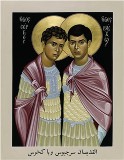
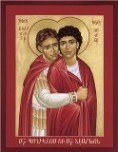
“Saints Polyeuct and Nearchus” by Robert Lentz

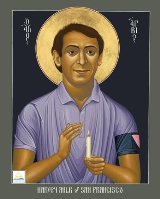
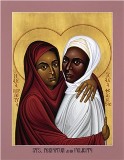
   Harvey Milk icon by Robert Lentz    Saints Perpetua and Felicity by Robert Lentz  

Innovative Religious Art
from TrinityStores.com

It’s fun and enlightening to look at icons of queer saints as All Saints Day (Nov. 1) approaches. Reader favorites are posted today at the Jesus in Love Blog. All are available from TrinityStores.com.

Click the icons to browse and buy cards, plaques, T-shirts, mugs, candles, and framed prints with these images and many more at TrinityStores.com. 


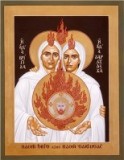
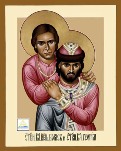
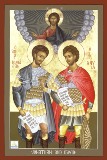
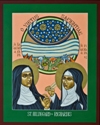
       Sts. Polyeuct and Nearchus by Robert Lentz    Sts. Brigid & Darlughdach by Robert Lentz    St. Boris and George by Robert Lentz  

       Jonathan & David by Robert Lentz    Hildegard of Bingen and Richardis by Lewis Williams    St. Wencelaus and Podiven by Lewis Williams
All icons from TrinityStores.com by Robert Lentz or Lewis Williams


Robert Lentz is a Franciscan friar based in New York. Known for his innovative icons, he was rebuked by the church for making icons of LGBT saints and female images of God. Colorado artist Lewis Williams of the Secular Franciscan Order (SFO) studied with Lentz and has made social justice a theme of his icons.

Sunday, November 02, 2014

Video: Imagine if the queer martyrs had lived


Imagine what would have happened if modern queer martyrs like Harvey Milk and Matthew Shepard were not killed before their time?

A moving video shows the headlines they might have made. In this beautiful world without hate, Harvey and Matthew lived long, productive lives -- and so did Martin Luther King, Anne Frank and many other martyrs for justice.

I'm posting it here for All Saints Day, All Souls Day and Day of the Dead (Dia de los Muertos).

The video “Imagine a World Without Hate” was produced by the Anti-Defamation League, a civil-rights group fighting anti-Semitism and all forms of bigotry.

____
This post is part of the GLBT Saints series by Kittredge Cherry at the Jesus in Love Blog. Saints, martyrs, mystics, prophets, witnesses, heroes, holy people, humanitarians, deities and religious figures of special interest to lesbian, gay, bisexual and transgender (LGBT) and queer people and our allies are covered on appropriate dates throughout the year.

Saturday, November 01, 2014

Icons honor queer saints for All Saints Day

“Saints Polyeuct and Nearchus” by Robert Lentz

   Harvey Milk icon by Robert Lentz    Saints Perpetua and Felicity by Robert Lentz  

Innovative Religious Art
Buy now at TrinityStores.com
Icons of queer saints are available from TrinityStores.com. Favorites of Jesus in Love readers are pictured here for All Saints Day.

Click the images to browse and buy cards, plaques, T-shirts, mugs, candles, and framed prints with these images and many more at TrinityStores.com.  New icons by the same artists are listed at the end of this post.


       Sts. Polyeuct and Nearchus by Robert Lentz    Sts. Brigid & Darlughdach by Robert Lentz    St. Boris and George by Robert Lentz  

       Jonathan & David by Robert Lentz    Hildegard of Bingen and Richardis by Lewis Williams    St. Wencelaus and Podiven by Lewis Williams
All icons from TrinityStores.com by Robert Lentz or Lewis Williams

"Daniel in the Lion's Den"
by Lewis Williams

Robert Lentz is a Franciscan friar based in New York. Known for his innovative icons, he was rebuked by the church for making icons of LGBT saints and God as female. Colorado artist Lewis Williams of the Secular Franciscan Order (SFO) studied with Lentz and has made social justice a theme of his icons.

Lentz and Williams artists created a variety of new icons over the past year, including at least one queer saint: the Biblical prophet Daniel, a eunuch famous for surviving the lion's den. (Click here for more on the queer side of Daniel).

The following icons are so new that I haven't had time to look into whether they qualify as queer. But they do represent the diversity of God's people, so explore for yourself:

New icons by Brother Robert Lentz, OFM

Click the names or visit TrinityStores.com to view:

Josephine Bakhita (19th century, Sudan)

Katharine Drexel (1858-1935, American)

Faustina Kowalska (20th century, Poland)

Andrew Dung-Lac (1785-1839, Vietnam)

Martin de Porres (1579-1639, Peru)

Pedro Betancur

Toribio Romo

Pio of Pietrelcina (1887 -1968

Simone Weil (1909 -1943, France)

New icons by Lewis Williams, SFO

Daniel in the Lion's Den

Peruvian Nativity

Columba and Ernan (521-597, Ireland)

Christmas Scene: Montrose, Colorado

Friday, October 31, 2014

LGBT-friendly Memorial for All Saints, All Souls and Day of the Dead


Add the names of your loved ones to Jesus in Love’s queer-friendly online memorial. Many believe they are visiting this weekend for All Hallow’s Eve (Halloween), All Saints Day, All Souls and Day of the Dead. Everyone is invited to add names by leaving a comment here.

Religion and society have often dishonored and desecrated LGBT lives. May all saints and all souls be restored to wholeness and holiness as we remember them. More info at the end of the memorial


Compassionate Spirit of God, unite us with the lives and visions of lesbian and gay heroes of our time… Unite us with all the souls living and dead, especially those souls taken by violence and AIDS. Unite us with all who boldly pioneered a way of pride and justice.
--from “Invocation for All Saints Day” by James Lancaster, published in Equal Rites


white candle Pictures, Images and Photos


In memory of: Tyler Clementi, Leelah Alcorn, Haylee Fentress, Paige Moravetz, Seth Walsh, Jeanine Blanchette, Chantal Dube and all other LGBTIQ youths who have committed suicide. Gwen Araujo, Rita Hester, Brandon Teena and all others who were killed due to anti-transgender hatred or prejudice. Harvey Milk, Matthew Shepard, FannyAnn Eddy, David Kato, Alan Schindler, and all others who were murdered in homophobic violence. Marcella Althaus-Reid, John Boswell, Peter Gomes, Bayard Rustin and all others who came out and supported LGBT people during their lifetimes. Mychal Judge, Henri Nouwen, Pauli Murray and all other religious leaders who worked for justice while keeping quiet about their sexual orientation. For Jeanne Manford, Adele Starr, and all others who stood as allies to LGBT family and friends. Rock Hudson, Freddie Mercury, Keith Haring, Alvin Ailey, Rev. Ron Russell-Coons, Rev. Jim Sandmire, Rev. Howard Wells and all others who died of AIDS. And for all saints and all souls, named and unnamed.


Therefore, since we are surrounded by so great a cloud of witnesses, let us also lay aside every weight, and sin which clings so closely, and let us run with endurance the race that is set before us,
--Hebrews 12:1


candle animated avatar Pictures, Images and Photos


I sing a song of the saints of God,
patient and brave and true,
who toiled and fought and lived and died
for the God they loved and knew.
And one was a doctor, and one was a queen,
and one was a shepherdess on the green;
they were all of them saints of God, and I mean,
God helping, to be one too.
-- from “I Sing a Song of the Saints of God” by Lesbia Scott, 1929


All Saints Day used to be called All Hallows Day, and the preceding evening was the Eve of All Hallows, now celebrated as Halloween. In Catholic and Protestant Christianity, the Feast of All Saints commemorates all saints, known and unknown. The following day, the Feast of All Souls, pays respect to the faithful departed who have not yet reached heaven. Prayers are offered to ask the saints to help the living, and to offer help to the souls of deceased friends and family.

All Souls Day is celebrated in Latin America as the Day of the Dead (Dia de los Muertos). The holiday is especially popular in Mexico, where the happy celebration is one of the biggest events of the year. These holidays are associated with the Celtic Festival of the Dead (Samhain). They grow out of the pagan belief that the souls of the dead return to visit at this time of year.

___
Related links:

LGBT Saints Series

Why we need LGBT saints: A queer theology of sainthood by Kittredge Cherry

LGBT litany of the saints: Harvey Milk, pray for us; Joan of Arc, pray for us... by Rachel Waltz

Queering All Saints and All Souls, Celebrating the Queer Body of Christ by Adam Ackley (Huff Post)

A Litany of All the Saints by James Kiefer

____
This post is part of the LGBT Holidays series by Kittredge Cherry at the Jesus in Love Blog. The series celebrates religious and spiritual holidays, holy days, feast days, festivals, anniversaries, liturgical seasons and other occasions of special interest to lesbian, gay, bisexual, transgender and queer people of faith and our allies.

Thursday, October 30, 2014

Why we need LGBT saints

Rainbow detail from St. John Altarpiece by Hans Memling (Wikipedia.com)

It’s time to welcome the queer saints. Many believe that saints and other souls will visit this weekend for Halloween, All Saints Day, All Souls Day, and Day of the Dead (Dia de los Muertos). LGBT saints are important because people are searching for alternative ways to lead loving lives.

Churches have tried to control people by burying queer history. The LGBT saints show us not only THEIR place in history, but also OUR place -- because we are all saints who are meant to embody love. We can tap into the energy of our ancestors in faith. For some they become friends and helpers, working miracles as simple as a reminding us that “you are not alone.”

For a new version of this article, click this link to Qspirit.net:
Why we need LGBTQ saints: A queer theology of sainthood


At first I thought that LGBT saints were rare. Gradually I came to see that they are everywhere throughout all time and they are among us now. We have all met saints in our lives. They are ordinary people who are also extraordinary.

Calling someone a “queer saint” is a liberating act in two ways: The most obvious one is that revealing the hidden queer sexual orientation or gender identity of traditional saints liberates people from sex-negative, oppressive church dogmas. In addition, revealing the “saintliness” of LGBT people ignored by the church liberates people from the tyranny of the sacred/secular dichotomy. Phrases like “queer saint” make a nice shorthand for headlines -- neatly challenging the assumption that sainthood and LGBTQ identity are mutually exclusive.

As All Saints Day approaches, I offer reflections on what I have learned by writing more than 70 profiles in the LGBT Saints Series over the past eight years. This is my queer theology of sainthood.

Sergius and Bacchus
by Robert Lentz
TrinityStores.com
Who are the LGBT and queer saints? If you want some specific names of this rainbow tribe, visit the LGBT Saints page at http://jesusinlove.org/saints.php.

One of the greatest challenges has been to figure out who is a “saint” and who is “LGBT.” If the boundaries of sainthood are slippery, then the definition LGBT is even more fluid.

Most mainstream churches would not canonize any saints who were openly LGBT, so we must claim our own saints. It’s important to re-evaluate familiar figures as well as to recover those who have been lost and recognize the saints of our own time. The church may seem to have the power to decide who is a saint, but each individual can also choose for themselves. Paul urges us to “work out your own salvation with fear and trembling” (Philippians 2:12).

Mitch Gould, a historian of queer and Quaker subjects, summed up the dilemma well when he told me, “Sainthood is a devilishly nuanced accusation.” Traditional stories of the saints tend to be overly pious, presenting idealized super-heroes who seem distant and irrelevant. Saints have been used to get people to passively accept oppressive situations. Too often the saints have been put on a pedestal to glorify virginity and masochistic suffering. The emphasis on miracles disrespects nature, the ongoing miracle of life.

Feminists have criticized saints as tools of the dominant morality, but with LGBT saints the opposite is true: They saints can shake up the status quo. We can restore the complex reality of saints whose lives are being hijacked by  hagiograpahies and hierarchy to enforce the status quo. Queer saints can help reclaim the wholeness, connecting sexuality and spirituality for the good of all.

Perpetua and Felicity
by Robert Lentz
TrinityStores.com
I began writing about LGBT saints after finishing a series of books on the queer Christ (Jesus in Love novels and Art That Dares). Many people told me that they couldn’t relate to a gay Jesus, but they liked the idea that LGBT people were among his followers. Church leaders have used saints to impose control from the top down, but the desire for saints springs naturally from the grassroots. People are drawn to the presence of spiritual power in the lives of the saints, and their willingness to use that power for others, even at great cost to themselves. Saints attract others with the quality of their love, even though their personal lives may not be “saintly.”

I was aware of new research and art about LGBT saints, so I was shocked to discover that it was not easily available online. Largely due to the church’s crackdown on LGBT spirituality, much of it was buried under obscure code names like “images that challenge” -- if it was available on the Internet at all.

As an independent blogger, I am free to put LGBT saints out there where more people can find and benefit from them. I decided to uncover and highlight holy heroes and role models to inspire LGBT people of faith and our allies. The positive response quickly affirmed that people are hungry to connect with queer people of faith who have gone before.

“The Forerunners of Christ with Saints and Martyrs” by Fra Angelico, 1428-30, Wikimedia Commons

What is a saint?
My definition of who qualifies as a “LGBT saint” continues to expand. First I included saints officially canonized by the church, but I soon discovered that many have achieved “sainthood” by popular acclaim. The church didn’t even have a formal canonization process for its first 1,000 years.

Ultimately all believers, living and dead, can be called “saints,” a practice that began in the early church. In the New Testament, Paul used the word “saint” to refer to every member of the Christian community, a practice continued by Rev. Troy Perry, founder of Metropolitan Community Churches. One of my memories from working with him was that whenever he wrote a letter to MCC members, he addressed it as "Dear Saints." We always got back some responses from people protesting, "I'm not a saint!" But in a very real sense, we are all saints.

Dictionaries define a saint as “a holy person” or “an extremely virtuous person.” I rather like the concept of sainthood that emerged in comments on this blog during a discussion of the post “Artist shows sensuous gay saints.” Atlanta artist Trudie Barreras wrote: “My definition of saint has absolutely nothing to do with what the hierarchical church defines, and everything to do with the quality of love displayed.” Or, as gay author Toby Johnson commented, “Being a saint means creating more love in the world.”

Joan of Arc
by Robert Lentz
TrinityStores.com
Sainthood comes in many different forms. Some become saints by leading an exemplary life, but the surest path to sainthood is to risk or lose one’s for the good of others. As Jesus said, “Greater love has no one than this: to lay down one’s life for one’s friends.” (John 15:13). Martyrs, from the Greek word for “to bear witness,” are a common type of saint.

Sometimes readers object that my LGBT saints series includes modern martyrs whose lives were not “saintly.” My understanding is that martyrs need not be role models, but they are honored simply because they were killed for a particular cause. Therefore I include people such as Harvey Milk and Matthew Shepard because they were killed for being gay and their deaths furthered the cause of LGBT rights, regardless of their flaws.

Whether or not they died as martyrs, the lives of the saints were indeed difficult. Our lives are difficult too -- and that can become a point of connection. Like today’s LGBT Christians, the saints sometimes faced opposition from within the church. Some martyrs, including cross-dresser Joan of Arc, were killed not FOR the church, but BY the church!

What is LGBT?
Lesbian, gay, bisexual, transgender and queer did not exist as categories throughout most of the history in which the saints lived. A convenient way around this dilemma is to say that LGBT saints are those of special interest to LGBT people and our allies. The term “queer” is increasingly used to describe gender-variant people of the past, so I often use the phrase “queer saints.”

Harvey Milk
by Robert Lentz
TrinityStores.com
Some deny the existence of historical LGBT saints because it’s almost impossible to prove their sexual activity. However, same-sex love does not have to be sexually consummated for someone to be honored as an LGBT saint. Deep love between two people of the same gender is enough.

Homosexuality is more than sexual conduct. The American Psychological Association defines sexual orientation as “an enduring pattern of emotional, romantic, and/or sexual attractions.” The dominant Christian culture tried to suppress overt homosexuality, so any hint of homosexuality that survives in the historical record should be given extra significance. Many official saints were nuns or monks living in same-gender convents or monasteries.  Naturally their primary emotional attachments were to people of the same gender. Soon almost all saints seem LGBT!

Let us be inspired by the LGBT saints who surround us as a “great cloud of witnesses” and commit ourselves to our own queer paths toward sainthood.

___
Image credit: God is enthroned in concentric rainbows with 24 elders seated within the outer rainbow in a detail from the 15th-century St. John Altarpiece by Hans Memling (Wikipedia.com). The image is based on John’s vision of the Apocalypse from the Book of Revelation.

___
Related links:

I have expanded on the ideas presented here by writing theological reflections based on feminist and queer theology at the following two blogs:

Feminism and Religion Blog: Feminism leads to a queer theology of sainthood by Kittredge Cherry

99 Brattle (Episcopal Divinity School blog): A queer theology of sainthood emerges by Kittredge Cherry

To read this post in Spanish / en español, go to Santos Queer:
¿Por qué necesitamos santas y santos LGBT?

Who are the "Queer Saints and Martyrs"? by Terence Weldon (Queering the Church)

LGBT-friendly memorial for All Saints, All Souls and Day of the Dead

An All Hallows' Eve Vigil to Begin Transgender Awareness Month by H. Adam Ackley (Huff Post)

LGBT litany of the saints: Harvey Milk, pray for us; Joan of Arc, pray for us... by Rachel Waltz

Queering All Saints and All Souls, Celebrating the Queer Body of Christ by Adam Ackley (Huff Post)

A Litany of All the Saints by James Kiefer

All Saints Day: Why We Need LGBT Saints by Kittredge Cherry (Believe Out Loud)

Sanctity And Male Desire: A Gay Reading Of Saints by Donald Boisvert
Spitting at Dragons: Towards a Feminist Theology of Sainthood by Elizabeth Stuart

Passionate Holiness: Marginalized Christian Devotions for Distinctive People by Dennis O’Neill

Special thanks to CJ, Sage, Terence, Dennis, Liz, Trudie, Toby, Mitch, Adam and Eric for comments and conversation that helped me develop this queer theology of sainthood.